
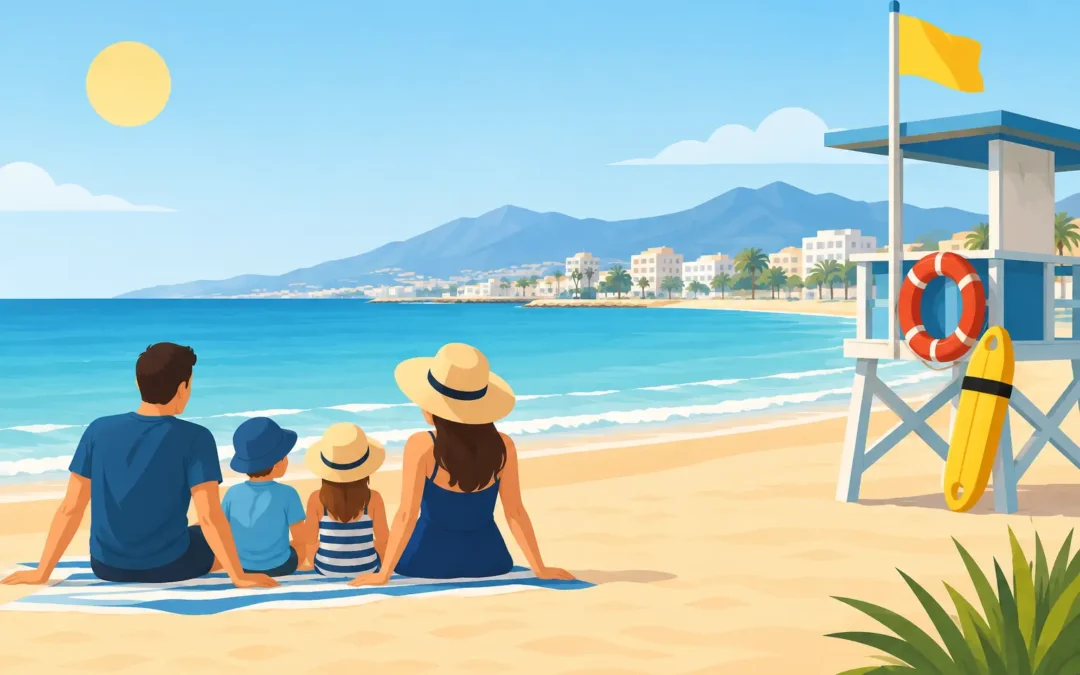
The Costa del Sol beach safety guide starts with a simple truth: a relaxed family beach day is far easier when everyone knows what to look for before the towels go down. Benalmádena’s beaches are welcoming, well-used and close to the resort facilities many families enjoy, but the Mediterranean still deserves respect. A few sensible habits will help you spend more time paddling, playing and enjoying lunch by the promenade.
Costa del Sol beach safety guide: start with the flags
Before anyone goes into the water, look for the beach flag and any lifeguard information point. Conditions can change over the course of a day, particularly when wind picks up or waves become stronger than they first appear.
A green flag generally means bathing is permitted, but it does not make the sea risk-free. Children should still be supervised closely and weaker swimmers should stay where they can stand comfortably. A yellow flag means caution is needed. It may be safe for confident swimmers to enter the water, but it is not a day for inflatable rides far from shore, energetic bodyboarding or letting children paddle without an adult beside them.
A red flag means do not enter the sea. This can feel disappointing when the sun is shining, yet it is there for a reason. Strong currents, rough water or other hazards are not always obvious from the sand. Choose sand games, a promenade walk or a pool instead, and wait for conditions to improve.
You may also see warnings relating to jellyfish. These can be more common at certain times of year and after particular weather conditions. Follow local advice, avoid touching anything washed up on the shore and keep children away from jellyfish even if they appear harmless. If someone is stung, speak to the lifeguard where available. Do not rub the area, as this can make the reaction worse.
Choose the right place to swim
Benalmádena has a choice of beaches, and the best spot depends on who is in your party. Families with young children often prefer a gently shelving stretch of sand close to facilities, toilets and refreshments. Couples or older children may be happy walking a little further for a quieter patch, but do not trade convenience for safety if you are carrying bags, supervising little ones or staying out late in the afternoon.
Swim between the designated areas where possible, rather than beside jetties, rocks, harbour entrances or places used by boats and water sports. Keep well clear of moving craft, even when they appear to be travelling slowly. If you hire a pedalo, paddleboard or similar equipment, listen carefully to the operator’s instructions and check what is included, especially buoyancy aids for children.
Avoid swimming alone, particularly early in the morning, at dusk or outside the main season when lifeguard cover may be reduced. If you are visiting in spring or autumn, do not assume summer services are operating every day. The water can also feel much cooler than the air, which catches people out after a long, hot morning on the sand.
What to do if the current feels stronger than expected
If you or a child feels pulled away from shore, try not to panic or fight directly against the current. Stay afloat, raise an arm and call for help. If you can, move parallel to the shore until the pull weakens, then return towards land. Adults should avoid rushing into deep water unless they can do so safely. Alert the lifeguard or call 112, Spain’s emergency number, instead.
For younger children, prevention is the better plan. Set a clear boundary for where they can paddle, stay within arm’s reach around the water and agree that they must ask before going back in. Armbands, noodles and inflatables can be useful for play, but they are not a substitute for active adult supervision.
Keep cool when the sun is strongest
The Costa del Sol sunshine is a major part of the appeal, but it is easy for UK visitors to underestimate it, especially during the first few days of a holiday. A breeze by the sea can make the heat feel milder than it is, while water and pale sand reflect UV back onto exposed skin.
Apply a high-factor, water-resistant sun cream before heading out, then reapply after swimming, towelling off and at regular intervals. Give extra attention to shoulders, ears, the tops of feet, the back of the neck and the parting of the hair. Children benefit from a UV top or rash vest as well as sun cream, particularly if they want to spend hours in and out of the water.
Plan a proper break from the midday sun. A parasol provides useful shade, but it is not full protection because reflected light still reaches the skin. A long lunch indoors, a return to your accommodation or time in a shaded café can prevent the tiredness and dehydration that often spoil an otherwise lovely afternoon.
Take more drinking water than you think you will need. Children can become distracted by the beach and forget to drink, while adults may mistake thirst for hunger or fatigue. Water is the best choice for keeping everyone hydrated. Save sugary drinks and alcohol for later, and remember that alcohol and swimming are a poor combination.
Make the beach easy with children
The simplest beach routines are usually the ones families actually follow. Choose a recognisable meeting point, such as the lifeguard post or a nearby chiringuito, and show older children where it is when you arrive. Take a quick photo of younger children in the clothes they are wearing that day. It may never be needed, but it can be very useful if you become separated in a busy area.
Write your mobile number on a wristband or place it securely in a child’s pocket if they are old enough to understand why. Teach children to approach a lifeguard, police officer or a staff member at a beach business if they cannot find you. It is also sensible to agree that they should stay still rather than wandering around looking for the family.
Keep a small first-aid pouch in your beach bag with plasters, antiseptic wipes and any regular medicines. Sandals or water shoes are worthwhile for hot pavements, shells and rocky edges. They are especially handy when walking from the promenade to the beach in the middle of the day.
A good beach bag for a family holiday should include:
- Water, snacks and a reusable cup or bottle for each person
- Sun cream, hats, sunglasses and a light cover-up
- A small first-aid pouch and any prescribed medication
- Towels, dry clothing and waterproof bags for wet items
- A charged mobile phone, plus a little cash or a bank card kept out of sight
Look after valuables without overthinking it
Busy beaches attract holidaymakers, and most days pass without a problem, but it makes sense to take only what you need. Leave passports, spare bank cards and expensive jewellery safely at your accommodation. Carry one payment card, a small amount of cash and a mobile phone, and keep them together in a zipped bag rather than loose under a towel.
Do not leave bags unattended while the whole group swims. If everyone wants to go in, take turns, use a waterproof pouch for essential items or keep one person with your things. This is less about being anxious and more about avoiding an avoidable interruption to your day.
The same applies on the promenade. Keep bags closed, do not place mobile phones on café tables near the edge, and make sure children know not to wander off with unfamiliar people offering gifts or activities. Benalmádena is a popular, family-friendly resort, but the usual holiday common sense still goes a long way.
Know when to take a break or get help
Heat exhaustion can begin with headache, dizziness, nausea, unusual tiredness or heavy sweating. Move into shade, offer cool water in small sips and rest. If symptoms are severe, do not improve, or someone becomes confused or faint, seek medical help promptly. Call 112 in an emergency.
For cuts, stings or minor concerns, speak to a lifeguard if one is on duty. They can advise on the immediate next step and, where necessary, direct you to local medical services. If anyone has a serious allergy, asthma or another ongoing condition, pack medication in your day bag rather than leaving it back at the flat.
After a beach day, rinse salt and sand from skin, check children’s feet for small cuts, and encourage everyone to drink water before heading out for dinner. It is a small routine that makes the next day more comfortable.
A self-catering stay can make these easy routines particularly convenient: you can pop back for a shaded break, fresh drinks, lunch or a quieter swim in the pool when the beach feels too hot or windy. Wherever you stay, give yourself permission to change the plan. The best family beach days are not the ones where you stay out longest, but the ones where everyone heads home happy, comfortable and ready to do it again tomorrow.